 Henrique Matos
October 25, 2026 · 4 min read
Fintech in 2026: the next customer is an agent

Banner: J. M. W. Turner, The Fighting Temeraire (1839), National Gallery. An old warship towed by a steam tug: the old system carried by the new. Public domain, Wikimedia Commons.

In 2026, opening a digital account or sending money in seconds no longer impresses anyone. The fintech advantage moved from the pretty app to the rails underneath it. And the next customer of these companies may not even be a person: it will be an AI agent buying on someone's behalf. Whoever wins that phase will be selling trust, not interface.
Finance is still expensive
Walter Bagehot, editor of The Economist, opened his book on the London money market with a line that still holds: "Money will not manage itself, and Lombard street has a great deal of money to manage." (Lombard Street, 1873).
Managing other people's money has always been expensive, and for a long time that cost barely moved, even with computers, the internet and phones. That stuck margin is what made room for so many fintechs: the same service with fewer branches, less paper and fewer middlemen.
Anyone who sells online feels it on every charge. In a SaaS, the payment fee is one of the first lines on the cost sheet, and it varies a lot depending on the method the customer picks.
In 2026, the edge is in the rails
Adam Smith explained in 1776 where wealth comes from: "The division of labour, however, so far as it can be introduced, occasions, in every art, a proportionable increase of the productive powers of labour." (The Wealth of Nations).
The clearest case of that division in payments is Pix, Brazil's instant payment system. The central bank built the rails, required the large banks to join and let every fintech compete on what it builds on top. In a short time, paying with Pix became a habit across the whole country.
 Pix, a public payment infrastructure. Image: Banco Central do Brasil, Public domain, Wikimedia Commons
The lesson for product builders is that an open, public infrastructure changes the game for everyone at once. Splitting a dinner bill, paying for coffee with a QR code or getting paid by a client at 11 pm on a Sunday became trivial. Once that's trivial, a fintech's edge is whatever it builds on top.
The next customer is an agent
Arthur C. Clarke wrote one of the most quoted laws about technology: "Any sufficiently advanced technology is indistinguishable from magic." (Profiles of the Future, 1973).
An agent that buys on its own looks like magic, and that's exactly what worries a bank. Payment systems were built assuming a person is clicking "buy". In 2025, Google launched AP2, an open protocol for agents to pay, with a simple answer: mandates, signed digital contracts that prove what the person authorized, with price and time limits, and the exact cart they approved.
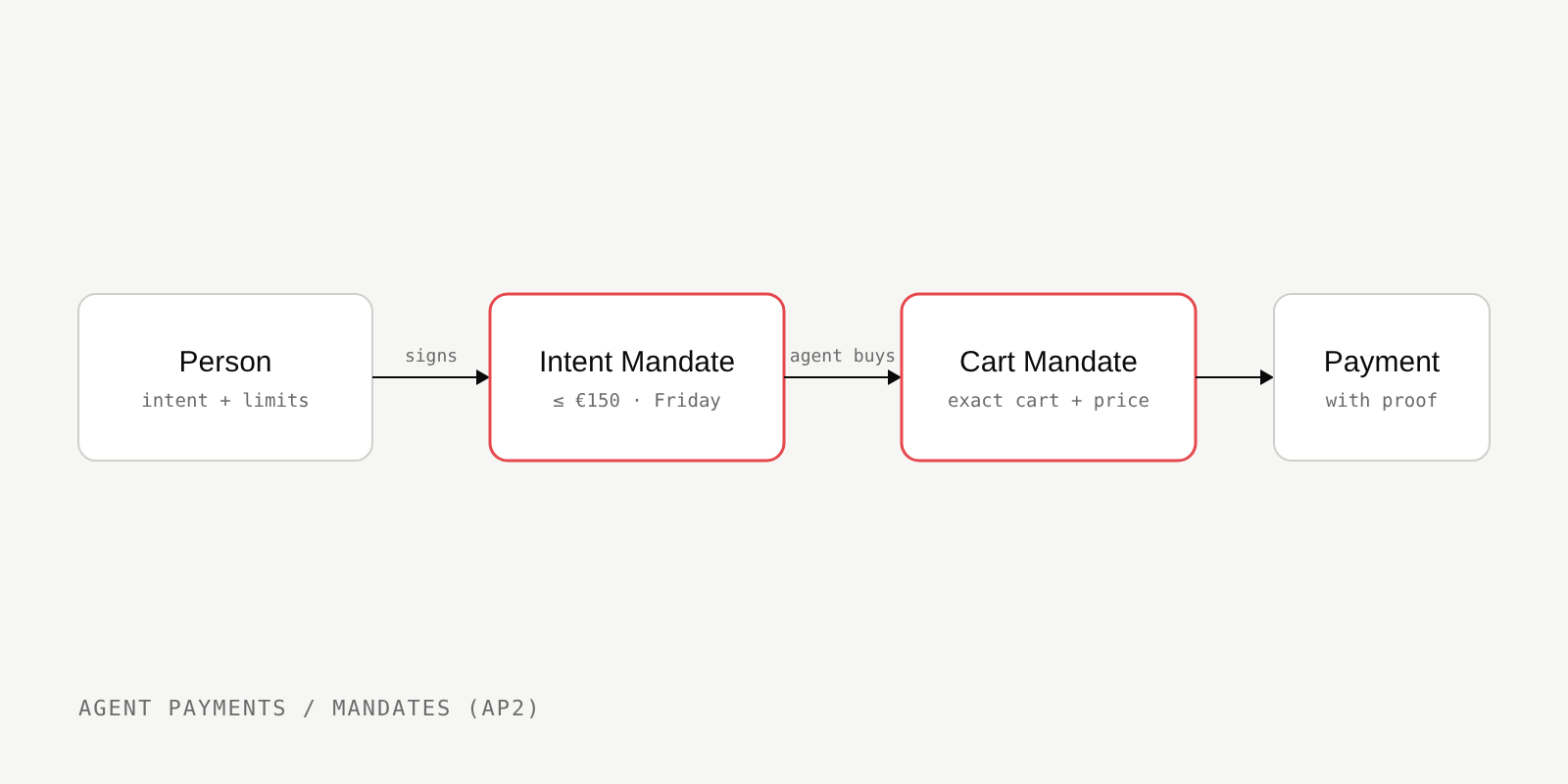 How a mandate limits what an agent can pay. Illustration by the author
Day to day, it looks like: "buy the cheapest flight to Lisbon on Friday, up to 150 euros". The agent searches, buys, and the bank can prove it was authorized. For developers, the fintech of the future looks less like an app and more like an API for authorization, limits and proof.
Who watches the agent
The Roman poet Juvenal asked, almost two thousand years ago, the question every AI regulator will repeat: "Quis custodiet ipsos custodes?", or "who will guard the guards themselves?" (Satires).
If agents start moving money, someone has to check the agents, and today's rules were designed for systems that change little and are validated once. The natural direction is for regulators to use agents to watch agents, with outside audits to close the loop.
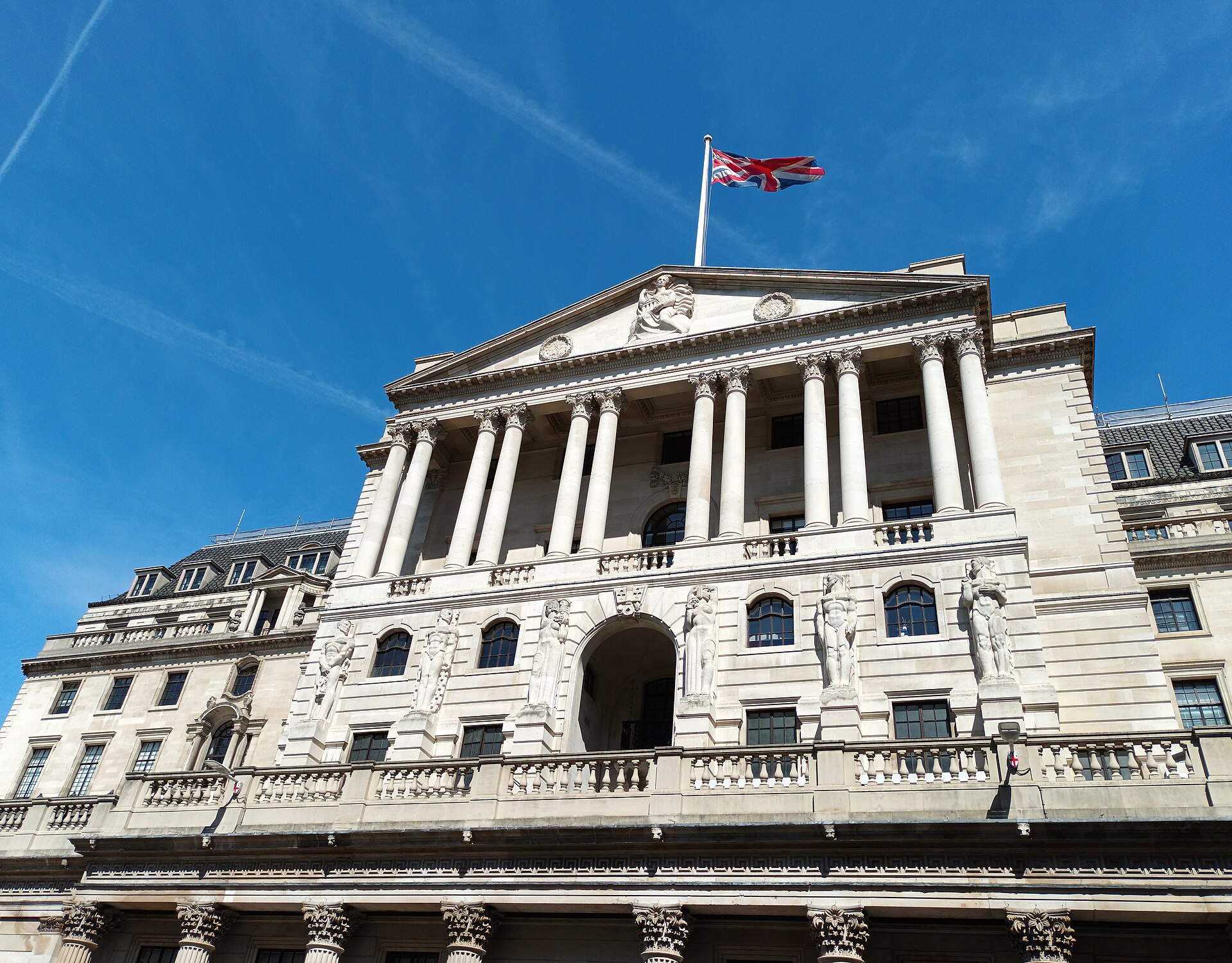 The Bank of England on Threadneedle Street. Image: acediscovery, CC BY 4.0, Wikimedia Commons
For developers this looks familiar: per-agent limits, a log of every decision and an audit trail. It's the same care we already take with rate limits and logs on a server, except now real money is flowing through it.
What could go wrong with this forecast
Pix worked with a strong central bank and mandatory participation, and that doesn't copy to every country. Agent payments are still early: an announced protocol isn't a consumer habit, and one big fraud could set everything back years. And financial technology forecasts tend to get the timing wrong more often than the direction.
Still, the direction looks clear. In 2026, fintechs won by using public rails well. In the next phase, the winner is whoever can prove, to the customer, the bank and the regulator, that the agent did only what it was authorized to do.