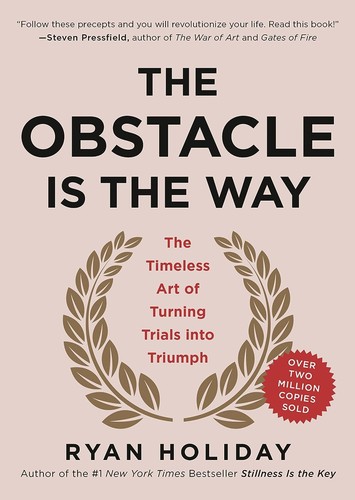
The book is inspired by Stoic philosophy and explains that setbacks, frustration, fear and failure are not interruptions to your life — they are the raw material for progress.
Instead of asking
"How do I get rid of this problem?"
the book teaches you to ask
"How can I use this problem?"
The whole mindset is organized into a very practical framework:
1. Perception
You learn to:
- stop exaggerating problems in your head
- separate facts from emotions
- reframe obstacles as neutral events
In practice: most suffering comes not from what happens, but from how you interpret it.
2. Action
You learn to:
- focus only on what is controllable
- break obstacles into small, executable steps
- act even when conditions are not perfect
The book strongly pushes the idea that waiting for clarity or confidence is a trap — clarity comes from doing.
3. Will
You learn to:
- accept what you cannot change
- remain steady under pressure
- use hardship to build emotional endurance
This part is about long-term resilience, not short-term motivation.
Obstacles are not only challenges to overcome —
they are the exact training ground that develops your skills, character and leverage.
In short:
The thing you want to avoid is usually the thing that makes you better, stronger and more capable.